

Curd Incubation Room
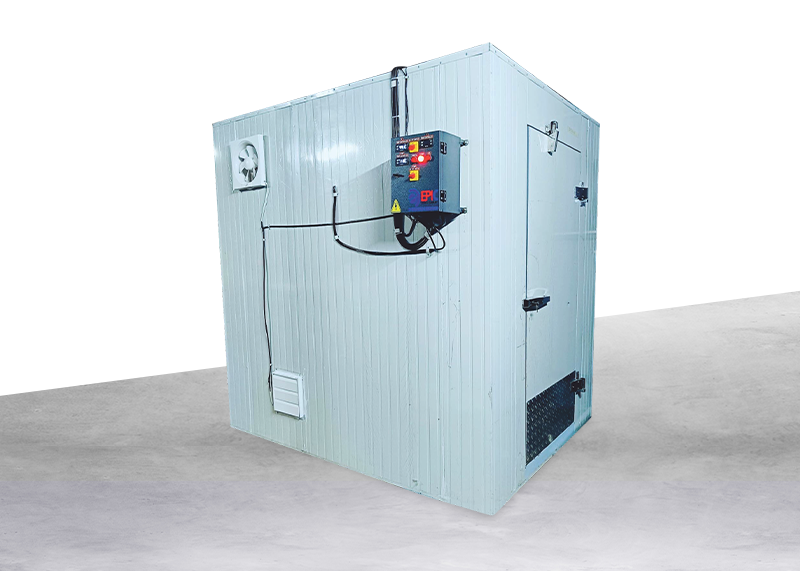
Curd Incubation Room
A curd incubation room is a specially designed space where milk is converted into curd (yogurt) through controlled fermentation. The primary goal of such a room is to create and maintain the optimal environment for bacterial cultures to thrive, ensuring that the fermentation process occurs uniformly, efficiently, and safely. Below is an exceptionally detailed guide on the design, requirements, and best practices for establishing a curd incubation room:
Understanding the Fermentation Process
Microbiology and Fermentation Dynamics
- Bacterial Cultures
The process of converting milk into curd is primarily facilitated by lactic acid bacteria (e.g., Lactobacillus bulgaricus and Streptococcus thermophilus). These bacteria ferment lactose in the milk, producing lactic acid, which then causes the milk to coagulate.
- Optimal Conditions
The bacteria perform best within a specific temperature range (typically 40–45°C), with optimal pH levels around 4.5–5.0 as fermentation proceeds.
- Time Factor
The incubation period can vary from 4 to 12 hours depending on the desired taste and texture. Longer incubation times generally result in a tangier curd.
- Capacity
350CFT TO 5000 CFT
Design Considerations for the Curd Incubation Room
Temperature Control
- Consistent Heating
- The room should be equipped with reliable heating systems (e.g., electric heaters, heat exchangers) that maintain a consistent temperature ideally between 40–45°C.
- Use thermostatically-controlled heating systems to avoid temperature fluctuations.
- Consider redundant systems (backup heaters) to ensure continuity in case of failure.
- Insulation
- Proper insulation of walls, ceilings, and floors minimizes heat loss.
- Materials such as foam panels, insulated bricks, or composite insulation materials can help maintain the desired temperature.
- Monitoring and Automation
- Incorporate digital temperature sensors connected to a central control system.
- Automate temperature adjustments using smart thermostats for real-time monitoring and control.
Humidity Management
- Optimal Humidity Levels
Although temperature is critical, maintaining a moderate humidity level (around 50–60%) is important to avoid surface drying of the curd and to control microbial growth.
- Ventilation Systems
- Install HVAC systems that allow precise humidity control while preventing condensation on surfaces.
- Use dehumidifiers or humidifiers as necessary to adjust the environment.